Powered By Blogger

Sunday, 24 October 2010

The Godfather Part II


Following on from the masterpiece that was The Godfather Part I, Francis Ford Coppola continues the trilogy with Part II, yet another gem from the 1970s, a decade which saw liberalism break through into mainstream cinema, introducing the gun culture that has epitomised Hollywood, and with it came a hauntingly magical period of cinema.

We follow Robert De Niro as young Vito in the early 1900s, as he breaks into the world of the mafia, toppling the region's warlord and making himself a Don in the process. Coppolla also brings us a taste of Michael Corleone as he attempts to reassert himself as the dominate mafia boss in 1958, a period during which hostile negotiations and widespread tensions threaten to tear apart the entire landscape.

On first appearance, De Niro finds himself in a difficult position, having to somehow dominate the role made famous by Marlon Brando. A brutish, resilient, well-respected and dominant individual, the role of Vito 'Don' Corleone is a role few men in Hollywood could have reprised with such energy, presence, charisma and sheer brilliance. De Niro, naturally exceeds all expectations and delivers one of the performances of his career (arguably bettered in Goodfellas as Jimmy Conway).

In Michael Corleone, Al Pacino finds a role which allows him the freedom of the camera, the freedom of the 'stage', and with ease he manages to create a monster in young 'Mikey'. As he negotiates behind allies' backs, and tries to find out who the traitor in his family is, the anguish, frustration and emotions are clear for the audience to see. Pacino's ability to appear as the calm before the storm, characters who could snap the very next second and yet demonstrate no visible emotion makes him one of the finest actors of his generation. His performance as Tony Montana in Scarface for years prior demonstrated his brilliance in such a role, one where power literally drove him to an early death. However, as Master Corleone, it is his sole duty to carry the integrity and history of his family on his young shoulders. It is his sheer presence in every scene, and the manner in which he asserts his prowess and psychological dominance which makes him the star of the piece, and without him at the forefront, one would have to question whether the film would really be as magnificent.

9/10

Monday, 11 October 2010

CSI

CSI: The Twilight Years

The day Warrick Brown died marked a radical shift and elemental realisation within the CSI fanbase. With Warrick’s death, Grissom’s character had been shocked to the very core, with Warrick’s true feelings for him surfacing towards the very end of his short life. As with the death in any television drama, in CSI it meant drastic changes were afoot.

When Gil Grissom left the show in Season 9, he left behind him a legacy that will not be re-envisaged. In his wake, Ray Langston, Psychology lecturer stepped in – albeit as a rookie investigator – in an attempt to give the show the burst of energy and fill the gaping hole that Grissom’s departure inflicted.

With the CSI producers fully aware of the uncertain nature of Langston’s character – both reasonably unpopular and also a rogue figure in general – they decided to squeeze as much from the newbie as possible, turning him into a would-be killer for a whodunit storyline at the end of season 10. Whilst the story arc was well executed, with no one truly knowing whether Langston was capable of such behaviour, the show is once again left with a character with whom no one really shares a rapport, a figure with a wealth of knowledge within the psychological field (exploited during his introduction to the programme and to the CSI team) but one who will never be tightly-knitted within the team as a known entity, and for that the show suffers.

The other problem with CSI as it is now, likely entering its final season, is that no one cares about the Lab Rats (as they are fondly referred to). Wendy, Hodges, Mandy and Henry all star as the lab technicians, character who give out the odd line of dialogue in the early seasons, nothing more. However, with the death of Warrick, and the depature of Grissom, more of an emphasis has been placed of stretching out the relationships between these characters in a bid to add depth and back story to the programme. Sadly, they lack character, charisma, any sense of personality and really add nothing to a show which primarily used to focus on being ‘out in the field’ or interrogating suspects. Whilst providing insight the lab rats’ lives may have seemed a good idea at the time, it does nothing but take valuable screen time away from the real cast members, and gives too much air time to the dank, bland and grey landscape that is the labs.

As this heavyweight drama series nears its final moments, it is more important to glance back over its impressive eleven seasons and admire the various stellar performances which brought the show so much success and huge audience ratings (it has been named the most watched television show in the world during its time on the air), than to ponder its demise. Whilst rumours suggest a film is in the pipeline, one can only hope that the show goes out with a bang and, if only one more time, Grissom is allowed one final appearance, to bid farewell to the programme he made, as well as the programme which made him.

Wednesday, 6 October 2010

Jersey Shore


Tired of the same old reality shows bloating the television listings? Sick and tired of daily shows edited to the high heavens, choosing select moments from hours of dull footage to extrapolate some kind of drama?

Jersey Shore burst onto the US television scene in 2009, and has taken the world by storm. Set on the Jersey Shore, in New Jersy, New York, the show follows the lives of eight 'guidos' as they try to have the time of their lives on the world famous 'Shore, renowned for its ultra-trendy night clubs and bars, its excessive binge culture, and its complete lack of self-dignity. Sounds like the perfect combination for a fly-on-the-wall reality TV show, right?


It is.

Starring Vinny, Angelina, JWoww, Snooki, Sammi, Pauly D, Ronnie and The Situation (yes, that's his name..albeit his nickname), Jersey Shore is an amalgamation of all that is wrong (and so so right) about trashy American reality programming. Night after night of fighting, drinking and smushing (having sex) leads to high tensions within the household and drama is found around every corner. Season 1 featured a Jersey Shore beach house, whilst Season 2 was based in South Beach, Miami. Thankfully both locations produced plenty of fireworks, though Jersey was notable for its non-stop fighting, must have been something in the water...

If you want brainless, highly amusing guilty pleasure television viewing, then look no further. Like I said...leave your brain at home.

Saturday, 18 September 2010

Parks and Recreation Season 1 Overview


Set in the fictional Indiana town of Pawnee, Parks and Recreation is a newly devised comedy from part of the creative team behind NBC’s The Office, Greg Daniels and Michael Schur. It follows the day to day drudgery of the parks council as they bid to improve their lowly town by making small changes to the local surroundings.

Making up the cast is a selection of Saturday Night Live alumni, including the bubbly Amy Phoehler as Leslie Knope, the ever-enthusiastic ring leader who smiles in the face of rejection and adversity; alongside the likes of Aziz Ansari, as Tom Haverford, the joker of the pack and Nick Offerman, the belligerent and serious Ron Swanson, a man who takes great care and pride in his work.

With a show that relies on its mockumentary style of presentation, comedy and its overall sense of unpredictability, it lacks any real originality within the television market. With programmes like The Office and Modern Family offering superior reactive dialogue and dysfunctional character work, it’s hard to see Parks and Recreation ever beating either of its main rivals to the punch.

One of the highlights of the show itself is the acting from Rashid Jones (I Love You, Man; The Office) who portrays the gentle Ann Perkins, a local resident whose husband falls foul within a desolate dumping hole, an area she wants to fill in, leading to her joining the committee. Jones brings to the show a sense of comfort, for she fits the ‘girl next door’ role to a tee, and always seems to represent the mindset of the viewer, playing perfectly off the wacky try-hard in Knope.

Perhaps my major issue with ‘Parks…’ is the forced reaction shots featuring Knope, a character the writers clearly want to emphasise as the hard-working and resilient force behind the committee, namely the one character who actually cares about the position she holds and the significant effect she believes she can have on the town. Whilst this in itself is understandable and Phoehler fits well into the role, it is outdone by Steve Carrel in The Office, a programme which effectively created and dominates ‘awkward’ comedy. In trying to emulate the same exact characteristics, the writers seem to shoot themselves in the foot, for it is not a strong enough character to carry the show on its own, whereas The Office has magnificent support from other areas of the show, meaning it was able to extend its reach across several seasons. ‘Parks’, it seems, does not.

Friday, 17 September 2010

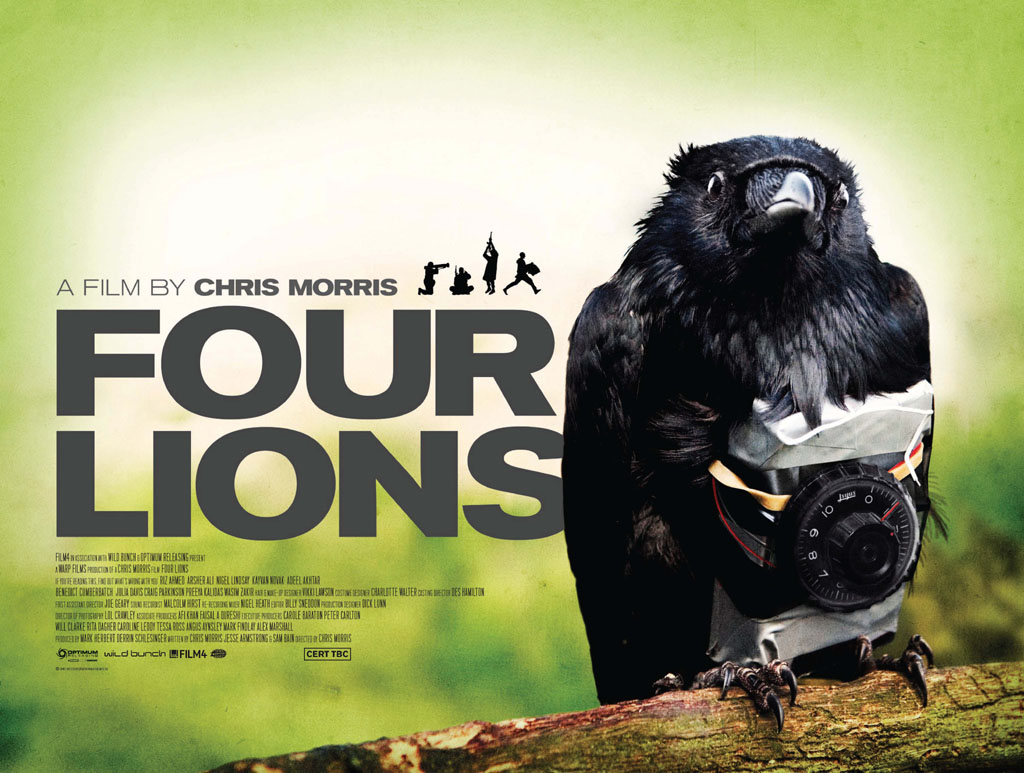
Four Lions Review


Four Lions

From the crazed, yet genius mind that is Chris Morris, Four Lions takes on the world with unedifying bravery in depicting the often ignorant and naïve perspective of aspiring suicide bombers. Set in the North of England, a group of young and misguided Muslims set forth what they believe is a radical and non-conformist set of beliefs regarding the afterlife, and how they feel Muslims as a whole are mis-treated by the global media.

One criticism to no doubt be aimed at the piece is that it perhaps makes light of what is a grave and appalling way of life for many in the Middle East, and indeed pain and suffering witnessed and experienced by thousands of victims’ families. By contrast, Four Lions sets out a very clear message from the beginning. In laying out the stereotypical characters from your atypical comedy film; the family man, the idiot, the troubled leader, and the misguided extremist, the film addresses the prerequisites for such a film to then deliver the comedy goods. Where Four Lions excels is in its ability to push home the grave truths and morbid understanding (or lack thereof) of how Muslim extremists believe that joining a Jihad and declaring their own war on their own citizens and indeed those in other territories will in some way reward them for giving their lives for a worthy cause.

Morris has, in a sense, set out to mock the core extremist sects for their farcical notion of laying down their lives for a cause which not only destroys lives, communities and peoples’ perspective of these very religions, they also contribute absolutely nothing to the world. There are few laughs in the film itself, and they are achieved through slapstick humour, glib and moronic remarks from the film’s jester, though little does he know of his own ignorance and gross stupidity.

Four Lions is a comprehensive fable complemented perfectly by a comedic punch which softens the blow of the subject matter in such a way that the audience feels at least subconsciously comfortable with finding humour in such a horrific and in your face subject matter. However, Chris Morris deserves recognition and praise for addressing an area often reported about on the news but never directly confronted, a matter which will likely never cease but should at least be exhibited as the flawed and ultimately tragic topic of concern on the lips of this very generation.

8/10

Saturday, 11 September 2010

The Orphanage Review


Psychological horror is, in my humble opinion, often a scarier concept than that of the 'jump horror' genre. The sense of mental torture, one which can drive its victims to suicide or a life-long suffering, is a far more terrifying realisation than that of an axe-wielding maniac. Or at least that's how I see it.

Whilst [REC] and The Orphanage are both Spanish films, that is where any similarities end. Whilst the former is about intense physical horror, exploiting gore and the concept of 'jump' scares to wrap its audience, this is a film which explores the pain of losing a loved one, but also the torture of trying to embrace life without them. Belén Rueda is the beautiful lead, playing a foster mother who accidentally kills her son in a freak accident but doesn't realise, leading to a series of traumatic hallucinations and psychological breakdowns.

Where The Orphanage excels in its ability to merge the concept of reality, and that of the imagination. Throughout the film, it is never clear whether Laura, the tragic mother, is in total control of her own pysche.


With an ending as touching as it is poignant, the film serves up a truly mind-bending experience. The treatment of death as a pyschological wound is wonderfully realised, and the camerawork is on the whole a fantastic aspect of what makes the film so enjoyable to watch. Not just as a practice in subtle horror but also as a means of appreciating the tragedy of personal grief.

7/10

[REC] Review


Having almost exhausted the extensive Western corridor of the horror film catalogue, I decided to try my hand at some foreign horror pieces. First on my list was [REC], a film I knew had received universal acclaim for its effective suffocating style of filmmaking, and the cleverly placed shots (provided by the trademark shakycam) which make it infamous, in the shadows of The Blair Witch Project.

With Manuela Velasco in the lead role as the excited reporter always looking for next big breakthrough newspiece, [REC] starts slowly, setting a gentle pace by examining the often mundane life of the fireman as they anticipate the warning sirens signalling a call-out.

Naturally, this sets the contrast for the rest of the film, which soon escalates as the audience learns of a troubled woman in a nearby apartment, who is heard screaming 'bloody murder'. As the film progresses, the cause of the 'flu' virus outbreak becomes more detailed, and more people mutate. The film continues in traditional zombie-film style, with the body count increasing and the environments becoming ever-more claustrophobic, as healthy inspectors close off the apartment block from the outside.

Where [REC] breaks the fairly predictable formula in its final third, as the Angela, the reporter, learns of the real secrets behind the outbreak and finds herself in the very apartment where the problems all began. Combining natural darkness, visceral diegetic sound effects from nearby zombies, and a constant state of panic from the on-screen characters, the film immerses the audience. The sense of panic, entrapment and a real lack of visual awareness - provided through the handycam's nightvision feature - really pushes home the feeling of terror encompassed by the doomed reporter.

Not even lousy CGI can dampen the quality of the film's closing moments, as any hope of escape is snatched away - quite literally - and the audience is left with the uncomfortable and surprisingly rare (in film history) sense of the never-ending nightmare.


8/10