Powered By Blogger

Monday, 16 August 2010

The West Wing


The West Wing


Running from 1999 to 2006, The West Wing was a fictional portrayal of the Democratic Presidency under Josiah (Jed) Bartlet. Featuring fast-paced back and forth dialogue, and its take on fictional and real-life political conflicts, it won three Golden Globes and 27 Emmy Awards.


Whilst many will glance at the West Wing and ponder its quality, its sense of drama and its ability to draw in its audience much in the way The Sopranos, LOST or other similar long-running TV dramas have been able to do, the West Wing possesses an altogether admirable and almost un-equivocal brilliance which somehow separates it from the rest.


The following is a list of the main characters from the show, particularly those who struck a chord and were able to influence the way the audience themselves felt about the issues raised within the show.


Josiah Bartlet – played by Martin Sheen, the President himself glimmers with authority and overwhelming intelligence. Possessing a PhD in Economics, and with a vast knowledge of the bible and the works of theorists the world over, the star of the show brings to the table qualities which television producers have tried to match or best in the last five decades and has rarely succeeded. With possible mention to Gil Grissom (of CSI fame), no other character in television drama carries with them an aura of known superiority, encyclopaedic knowledge nor of the ability to master a scene to the point of dominating every scene they are in.


Toby Ziegler – played by Richard Schiff, the Communications Director, brings with him such forceful ideologies, self-moralistic values and the overbearing belief that he is never wrong. Through Toby, Josiah finds his first true fight. With little care who he offends, Toby is one of the key players in dishing out the dialogue, one of the many reasons the West Wing is so highly acclaimed. His uncanny ability to argue his case with passion, dedication and emotion places him high up in the political ranks.


Sam Seaborn – played by Rob Lowe, the Deputy Communications Director, is another of the fast-paced dialogue magicians, waving his aural abilities about the place in the first three seasons, displaying his knowledge of global politics as well as his awareness of the issues that really matter to the American public. Whilst his position within the show is lesser than that of Toby, his influence over the President and his ability to make anyone see his way of thinking is what makes Sam such a significant character within the West Wing, sadly missed through the

later seasons though his return in the finale is greeted with universal delight.


Josh Lyman – played by Bradley Whitford, the Deputy Chief of Staff, is arguably the show’s main character besides that of the President. Most of the shows revolve around Josh’s ‘will they, won’t they’ relationship with Donna Moss – his assistant – and the subsequent back and forth. One of the more notable traits to Josh’s character is in his foolish behaviour, often making insensitive remarks or simply making wisecracks, Josh’s character comes across as simply more of an everyday man. Though his skills involve how best to react in a crisis and how to weave one’s way out of problem situations, he is still chosen as the central mouthpiece, often shown looking scruffy and unpresentable, he is essentially the character the audience can most familiarise themselves with.


Leo McGarry – played by John Spencer, is the Chief of Staff, the man everyone must go through to in order to discuss their issues, solve international and domestic problems or simply to talk to the President. With seemingly decades of experience, Leo is the ‘wise old man’, the President’s best friend and former running mate, and the person everyone leans on for personal advice or a shoulder to ‘cry’ on. The effect his death has on the rest of the team demonstrates just how important Leo is to the running of the office and the rapport he managed to build with the rest of the ensemble.


Though these are merely brief and lacking depth, I felt it impossible to truly capture or assess just how important the West Wing is to television drama and the epic nature of the silver screen. While shows like The Sopranos delivered a consistent element of gritty style and an unbelievably well-realised script, the West Wing is one of those shows which draws you in, and doesn’t let you go until you’ve either taken from it a moral or an appreciation for the lesser known issues in life.


Sure, some episodes are forgettable, and most of seasons 5 and 6 are notably lacking in quality, but there are episodes that stand out. Requiem, for example, is based around Leo’s funeral and manages to squeeze emotion from every scene. Naturally, given the circumstances, the episode was bound to be sad but the solidity of the acting on show and the dialogue used stands proud, connecting the audience to the loss of a man whose last years were spent living out the role of the father figure. That Spencer had died in real life is what brings home the harsh reality of death and how unexpectedly it takes away from us the wonderful characters we see on the television or in everyday life. The maturity of the death, and the manner in which the sombre occasion is handled, demonstrates just how brilliantly the show was able to take issues or events and make them all that more significant, as if the characters lives were decided upon these pieces.


That in itself, is why the West Wing deserves to be - and will certainly be – remembered for decades to come.


Wednesday, 4 August 2010

Rob Zombie's Halloween II


Rob Zombie's 2007 remake of the classic horror 1978 Halloween, just one of John Carpenter's hugely successful films, saw a change in attitude and direction. Taking a new perspective, Zombie took us through the eyes and mentality of young Michael Myers in a bid to understand just what that troubled child was going through to make him commit such atrocities. The film was a genuinely surprising effort, with enough changes to make it worthwhile as well as a refreshing approach which resulted in more dynamic camerawork and an extra dimension to the mute serial killer in Michael.

However, with 2009 came the Halloween II remake. The original, loved by critics and fans alike, followed Michael as he once again escaped a mental asylum, seemingly happy to slaughter anyone who tried to get in his way (and in horror movie fashion, anyone who was deemed immoral).

The problems with Zombie's sequel is not just that it's badly acted, badly scripted or that it defies logic throughout, more the addition of the white horse symbol, a seemingly random psychological symbol which is meant to demonstrate young Michael's psyche and manipulate his sense of being, thus drawing from him a combination of anger and brute force. The white horse is accopanied by a woman, and said sequences - often conveyed in a fantastical manner - seem to demonstrate links between Michael as a child and his older self, suggesting he hasn't matured and that he is still as irrational as his younger self.

The biggest problem I had with the film was that the holy grail of no-go areas was breached. The idea of hiding Michael's face is successfully avoided throughout the original Halloween franchise, yet in the final scenes of this weak remake, he is revealed as a hagged, trampy looking slob. In a sense, this is a direct analogy of how Zombie has treated this sequel. Given free-roam within a cult franchise and he destroys the once-faithful image. Quite where he went wrong between the first film and this disgrace, I have no idea.

4/10

Sunday, 1 August 2010

Inception


Inception


Forget Memento.


Forget The Prestige.


Sure those are films which require some degree of mental input to track and understand in their fullest extent, but Christopher Nolan's latest epic takes things to the next level.

The term Inception refers to the process of manipulating someone to the extent that you are to implant into their mindset a particular feeling or behavioural intent. It is essentially a form of psychological headlock, engineering another person to believe something or to do something they wouldn't otherwise do.

Leonardo DiCaprio plays Dom Cobb, a highly trained Inceptor, whose 'final job' it is to infiltrate the mind of the heir to a dying business tycoon in order to save the global markets and - naturally - to finally find his way home to see his children.

With Joseph Gordon-Levitt and Ellen Page on board as researcher and architect respectively, Cobb must find his way into the mind of Robert Fischer, the heir in question, in order for him to split up a business partnership and end his father's stranglehold on the world market.

Whilst the premise seems hard to consume or even accept at first, it is not the heist storyline which takes centre stage. Sure, the film's focus seems to be there, but the core mechanic is the idea of lost love, the idea of keeping hold of memories which define us as humans and which mould the way we live out our lives, affected by the slightest of emotional investment.

Many have alluded to the film's structure as a mere mirror to that of the world of filmmaking. The film itself refers to the idea of architecture, of researching subjects and of the execution of fantasy. These are all elements directors, producers and actors must explore and refine in order to bring the audience out of reality and into what is effectively - if the film does its job - transform the cinema into a world where fantasies can be lived out, where everyday people can become superheroes, millionaires or simply be a part of something impossible to imagine within the confines of their normal lives.

In this sense, Nolan creates a world which caters to his audience's requirements. A world which has few rules or barriers but which also allows the freedom to explore the concept of maintaining an elements of the past whilst also shaping the future. Dicaprio, as ever, is solid in his role as the troubled but authoritative leader, whilst Gordon-Levitt once again shines as a confident and mercurial sidekick. The former proving himself as one of the finest actors of his generation, the latter looking to follow in his footsteps.

Whatever people make of Inception, with its convoluted and layer-ridden belief system and sense of meaning, there is no doubting its ability to make people think. Whether the audience is baffled by the film's meanings or because of how it renders them questioning their own existance, it is a film which will be talked about for years. An easy film to interpret it is not, but Inception lays the groundwork for the audience to truly appreciate what they have in life, and to cherish anything they may have let slip from their grip.

7/10

Sunday, 16 May 2010

Uncertainty


A film consisting of two lateral storylines. One involves a new couple attends a peaceful family gathering, whilst the other is how the same couple is chased over New York for a highly valuable phone. Stars Joseph Gordon-Levitt and Lynn Collins, both of whom are very good actors but the film itself doesn't seem to have a message. If anything, it demonstrates how something as bland as living a happy but uneventful life is something to savour, when compared to a potentially fatal run-in with Russian gang members.

Collins is very cute, and Levitt as charming as in (500) Days of Summer but there's little to recommend in this film. It's just above average but in the sense that bar a few basic stupid mistakes in the film's plot, it's a vanilla affair.

6/10

Thursday, 29 April 2010

Slacker Uprising


The man famous for his depictions of the Republican party and George W. Bush brings yet another pro-Democratic movie to the mainstream, this time trying to encourage what he sees as the laziest demographic to vote at the 2004 US Election.

Having created huge controversy the world over for his highly critical pieces Fahrenheit 9/11 and Bowling for Columbine, Slack Uprising is Michael Moore's 2007 effort.

His belief and biggest concern about the voting system is that young adults and college students, allowed to vote from the age of 18, do not care enough to show up to voting booths and register their decision on who should run the country.

Whilst the idea of filming this process is interesting in theory, it does not transfer well to the big screen. The film's introduction tells us what we already know, that Moore's effort were not enough to ensure Bush's reign in the White House would come to an end. In that sense, the film is pointless because the audience already knows the outcome and many couldn't care less about the campaigning.

The other aspect, however, is the way in which Moore evokes a sense of purpose in the would-be voters across the USA. His aim is to tour the country, visiting low-key back alley states who would never otherwise be covered by the mainstream news, as well as the heavyweight states such as Ohio and Florida, which have decided many an election.

The opportunity to experience on screen the masses that attend these rallies and deafening applause from each set of voters is incredible and gives an idea of just how much support the Democrats were accruing as the campaign progressed, although many would doubt whether everyone involved would actually vote, as nothing is set in stone by this point.

Moore hints upon sentimental areas, such as the right to free speech and the killing of four students by Nation Guard soldiers, who were sent to disperse students protesting the invasion of Cambodia, at Kent State University, Ohio. With respect to these acknowledgements, the film certainly touches on pressing issues, such as the way the government responds to opposition and the way unjust action is taken against those who, in this case, are protesting unarmed. Thankfully, this does not happen anymore.

Politics aside, Moore's select editing of the campaign footage is at times misleading and manipulated as one would expect. Interviews with pro-Bush voters are edited to have them appear unintelligent and/or downright idiotic. Later in the film, we are introduced to the Bush voters who sneak into the rallies and have to be removed due to being a disturbance. These scenes are only mentioned later in the film as if it is an emerging problem, and not a constant hassle which I found strange, and slightly questionable

Slacker Uprising certainly serves its purpose; it demonstrates just why a Democracy should work and why the ability to vote is a human right and justifiably so. However, it is horribly disjointed in places, and doesn't always feel fluid as a production.

6/10

Tuesday, 27 April 2010

Tony: Review


Tony

Yet another in a series of unknown films and never be released nationwide, Tony tells the story of an unemployed reclusive and socially awkard creep living in East London.

Tony Benson lives a very sheltered life, relying on 80s and 90s action films to build his lust for killing, whilst presenting a weedy and shy guise when out in public. During his lonely days, he lures unknowing clubbers, druggies and door to door salesmen to his flat, before unleashing various murder techniques. Storing their bodies and limbs in his flat, he later dispenses of them in nearby canals.

For the first time in a long while, I can understand how an independent film may be overlooked and kept out of the public eye. This is not a film which glorifies any aspect of life. It merely paints a grim picture of being lonely, scared of human contact and is devoid of a positive message. Nevertheless, other than an abrupt and seemingly lacking ending, the film is a subtlely poignant albeit nasty tale of loneliness in modern Britain.


7/10

Sunday, 18 April 2010

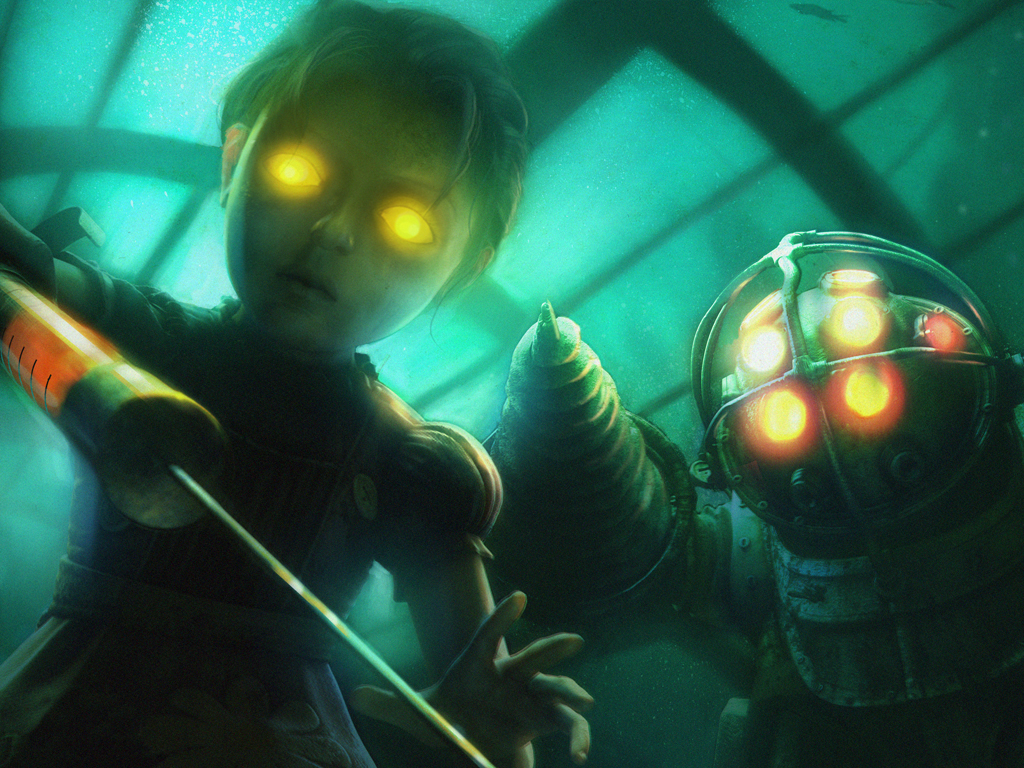
Bioshock 2 Review


Bioshock 2


Set in 1968, eight years on from its sequel 'Bioshock', this highly anticipated title was released in February without participation from original creator and inspiration Ken Levine, whose ideologies and input produced the innovative storyline handling and impressive end product.

Here, though, the gamer plays the role of Delta, a Big Daddy 'creation' who has had his Little Sister removed from by Sofia Lamb, a devious psychiatrist who has taken control of Rapture, the game's fictitious under-sea utopia, following Andrew Ryan's demise in the first game.

Whilst the creative absence of Levine had brought with it cries of woe from the most dedicated of Bioshock fans, it was seen as a chance to inject a zest of fresh writing and allowed, many believed, a chance for the series to perhaps look to other characters to produce yet another atmospheric and groundbreaking entry to the critically acclaimed IP.

Whilst the game itself doesn't bring any huge changes in any department, it certainly stands strong as both a separate entry in terms of creative production, but also as a standalone title. Those unfamiliar with the earlier game are reminded throughout Bioshock 2 of events and characters from the past through audio log entries and interaction with newer and pre-existing characters this time round. Though those with fond memories of Bioshock will not be miffed either, old characters making cameos along the way, be it through audio logs or through psuedo-cutscenes.

Gameplay mechanics are only slightly amended; the ability to wield plasmids and weapons at the same time produces some fantastic and ultimately endless ways of killing enemies, an ability which was lacking from the previous title but didn't necessary take away from the overall experience. That said, it certainly helps in close-quarters combat environments and does nothing but help those who find facing enemies overwhelming at times.

Probably the biggest letdown of the game itself is the way different characters are introduced and the way their impact on the lives of Eleanor, the game's main story character, Sofia Lamb and Delta is demonstrated. There are points in the game where peripheral characters interact with the player but little explanation (or at least, no clear explanation) is offered. This left areas of confusion in the game's timeline and left me feeling like I didn't know why I was taking on some enemies but within the overall context, this was not a concerning factor.

When considering Bioshock 2 in the same breath as its predecessor, it's hard to really compare the two. The original offered a fantastic game world, and one which players could observe and gaze at in awe, realising the history and monolithic collapse that had taken place just years earlier. The way the sense of immense atmosphere and presence was created made the game that much more impressive when placed side by side with other first person shooters across the various generations of games consoles. However, as a sequel without its creator, and with a tough task to overcome in bettering the previous title, it was never a plausible option.

However, perhaps the game's biggest achievement is how it handles the ending, a tricky area for all game developers. How does one (possibly) bring to a finish one of the better-realised stories of the current generation, whilst satisfying those who live for the Bioshock series? Without spoiling anything for those yet to play the game, for me it was a brilliantly executed ending. Not only does it wrap up the ideologies discussed in the two Bioshock titles, it all questions the ideal of Utopia, and just what makes such a magical (or otherwise) fantasy.

As a standalone title, Bioshock 2 emerges as an impressive, albeit varied shooter. It makes enough improvements to be considered a great entry within the Bioshock franchise but also makes enough changes to separate itself from the original. Does it better the original's ending, absolutely. Is it better than the original? Not quite. But few can argue that it is itself is a thoroughly enchanting and rewarding game by itself.

8/10