Powered By Blogger

Monday, 18 January 2010

The Invention of Lying


The Invention of Lying


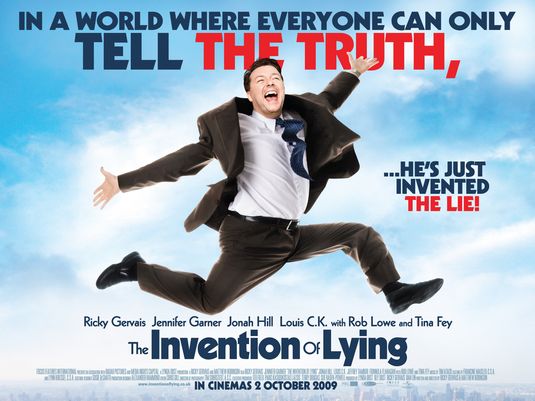
Ricky Gervais’ second effort at filmmaking comes in the form of The Invention of Lying, a largely average affair which does nothing but prove that the chubby comedian is far better suited to podcasts and television.

The premise is that of which in a world based upon the foundation of blunt truths and a lack of belief systems, Mark Bellison (Gervais) utters a single lie which causes the whole world around him to change, for everything he says is taken as gospel. Bellison soon becomes a makeshift Messiah, millions hang onto his ‘commandments’ and in an attempt to find true love, he realises that no one’s life can be perfect.

There are problems, contradictions and sheer cock-ups in this flop; what is essentially an extension of Gervais’ largely undeserved ego. The lie which changes the course of the film is hopelessly unrealistic (apparently a bank clerk would believe a customer over its own accountancy system with no questions asked), and simply sets the standard for the rest of the farce. Gervais’ quips, sampled from The Office and Extras come across as tired and predictable, and the standard of acting across the board is embarrassing, with extras seemingly plucked from the streets given their enthusiasm and shockingly unbelievable performances.

Gervais’ take on the belief system will likely shock many Christians, his belief that the omnipresent figure who controls the (though he never refers directly to him as God) is a prick, and his unsubtle reference to himself being God – a phase in which he is clearly portrayed as a lazy layabout – place Gervais in a very bad light.

Ego aside, the film is badly contrived, presents few moments of emotional involvement, and the lead characters are too archetypal and bland to truly care about. Perhaps the icing on the cake – and not in a positive sense - is Stephen Merchant and Shaun Williamson’s cameos in a poor flashback effort, a scene which not only exudes low budget and tongue-in-cheek poor acting, but also adds a layer of pointlessly tacky additions to what is already an unnecessary and woefully below-average production.

3/10


90 Minutes of Bliss


500 Days of Summer

Launching an Indie twist on the rom-com genre, 500 Days of Summer examines the concept of fate in modern day America. Its lead stars Tom (Joseph Gordon-Levitt of Third Rock from the Sun fame) and Summer (Zooey Deschanel, Yes Man) come together whilst working together, seemingly meant to be, despite Summer’s reminders that their relationship is anything but; a casual get together which inevitably leads to wandering feelings and someone getting hurt along the way.

Another new-age Indie-style film from Fox Searchlight Pictures, 500 Days takes a non-traditional approach to the ideals of love, fate and long-term relationships, delivering a refreshing but oftimes depressing tale of how sometimes love just isn’t meant to be with some couples. Told in non-chronological order as a means of clearly presenting the opposing emotions experiences by Tom, the format is instantly accessible. Narration provides the audience with the details required, the quirky side-friends allow an insight into Tom’s personality and his take on relationships; the film never takes itself too seriously nor does it patronise the viewer by shoving the message in their face.

Deschanel is as stunningly beautiful as in Yes Man, whilst Gordeon-Levitt brings life, charisma and charm to his role, and couple exude chemistry and a natural aura whenever they’re together. Despite – or perhaps as a result of – the downturn in Tom’s fortunes, he finds his happiness elsewhere. Some say it’s fate.

A wonderfully quirky film - which doesn’t always take the standard storytelling route - but manages to deliver from start to finish.

8/10

Sunday, 17 January 2010

Elementary, Dear Watson!


The latest in a long line of Sherlock Holmes PC titles, this entry is the first to appear as a port on the Xbox 360 and boy, does it show. The developer Frogwares provides a different approach to the infamous serial killer 'Jack The Ripper' who terrorised London in 1888, mutilating prostitutes. Without forensics and with little to no information made available to the Metropolitan Police, the killer was never found and no one was convicted for the brutal murders.

Sherlock Holmes vs Jack The Ripper, however, puts forth the dominant theory on the matter; that the killer was Jacob Levy, an Aldgate-based butcher who, it is explained in the game, had several motives for committing such atrocities.

The game itself is a clear port; seen early on through the poor visuals, constant slowdown and terrible voice-acting. Dialogue is executed with little conviction, the voice work is mostly wooden and to make matters worse, there are gaping pauses in long dialogue sequences, removing any intrigue or sense of drama. Characters present a mix of shambolic Cockney efforts; exaggerated American voiceovers and an unusual mix of the two are combined in the case of the street children called upon by Holmes to aid him in his investigation. The poor souls don't seem to know where they're from, flittering between differing accents at will.

Aside from the aforementioned flaws, the game does well to provide useful information on the events though with no one knowing what actually happened, the game provides its own version of how the murders were carried out. Naturally, in order to create suspense and intrigue, the game has twist the truth somewhat in order to create a link to suspects otherwise it would peter out to a non-event.

Those looking for replay value will be sorely disappointed; there is only one 'mode' and unless you've missed out on achievements the first time round and you feel like putting yourself through another ordeal in order to sweep up some vital points, there's no reason to touch the game again. The game lasts on average 10-12 hours, meaning masses of dialogue text-branches, endless loading screens and plentiful gaps in cut scene animations.

However, for those with an interest in the subject matter, the game offers a rare console experience into the point and click history sub-genre, and whilst it is far from being a technical colossus, it meets its purpose. Just don't expect a rollercoaster ride of emotions.

6/10

Saturday, 16 January 2010

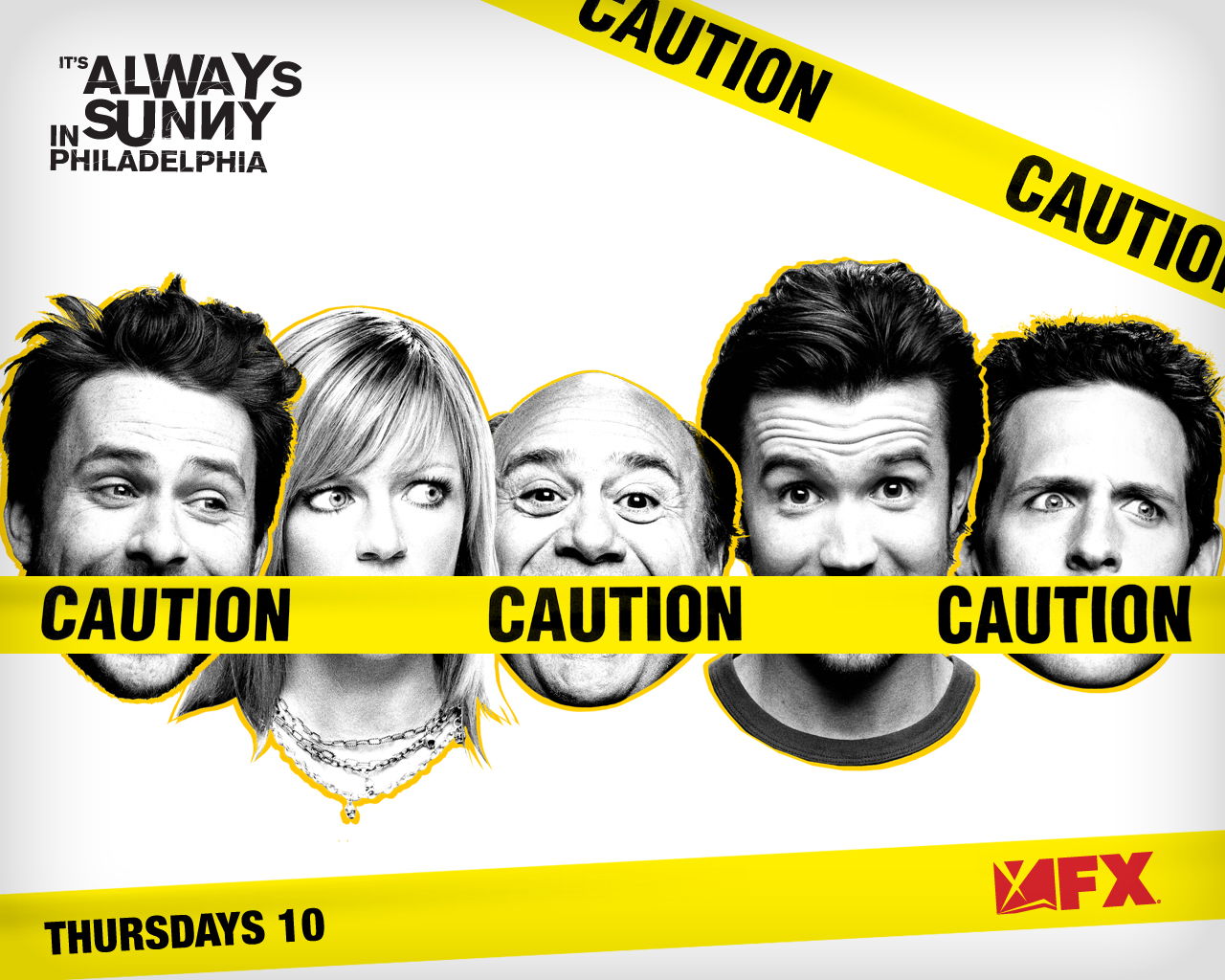
It's Always Sunny In Philadelphia


Having been recommended the show by a friend, I decided to give the It's Always Sunny pilot a go, assuming it was an immature sex-driven sitcom which would focus on purile comedy at best whilst adding nothing to the world of comedy nor of intelligently-written live-action shows.

However, I was pleasantly surprised to find that the pilot offered something no other sitcom had provided me with. The show possessed a jagged, raw edge which allowed for the possibility of pretty much anything happening within the show's universe.

The show's basic premise is that of a group of four single young adults; Charlie, Dennis, Mac and Dee. Danny DeVito completes the gang and whilst his actions have major implications on the others, his character doesn't warrant the focus the rest deserve for they carry the show without him. On a day to day basis, the gang run the Paddy's Bar in Philadelphia, only for random and normally nonsensical events to interfere in their banal everyday lives, usually resulting in one of them having sex with another's relative along the way. Dennis and Mac provide the machismo, Charlie plays the idiot of the group and Dee the naive and foolish third wheel role. DeVito, who plays Frank - Dee and Dennis' estranged father - is the troublemaker, investing in half-planned schemes, investments and does his best to ruin everyone else's lives whether he means to or not.

What It's Always Sunny brings to the already full-to-the-brim comedy arena is a sense of raw, unpredictable and thoroughly entertaining dialogue. Charlie, Mac and Dennis provide the canon in this respect, churning out lines which at first appear to be off the cuff ad-libbed lines simply because they're delivered with such simplicity and nonchalance. The nature of the show is relaxed, genuinely fun and each episode guarantees fantastic one-liners; values set in place for the stars of the show also created it and provide the script, meaning no more tired readings nor turgid to-and-fros.

Whilst there are certainly more intelligent comedies out there; Arrested Development, Curb Your Enthusiasm and arguably The American Office, It's Always offers a refreshing take on the very idea of the sitcom genre, delivering genuine laughs in a laid-back take on an ancient formula.

Friday, 11 December 2009

Falling Down


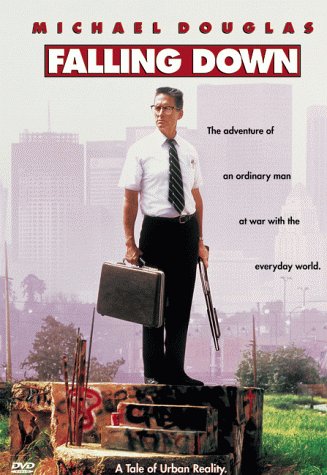
This 1993 Joel Schumacher film explores the banality of everyday life, in a world exposed to the most intense of media saturation and the effect it has on those already being pushed over the edge.

Michael Douglas plays the dangerous anti-hero as he attempts to get to his daughter's birthday party, having to overcome various delinquents and societal problems in his path. Whilst Douglas' character William Foster appears at times to be mentally delusional, he oftens utters remarks regarding the state of the world's economy and takes a vigilante approach which many would deem fair and understandable. Though when picked up on the vigilante theory, Foster looks to flatly deny the remark. Douglas plays Foster well, giving off an aura of confusion, frustration and loneliness which is meant to define the everyday man in a world destroyed by advertising, political correctness and fascism.

There are various themes at work in Falling Down. Not only do patriotism, racism and homophobia get a mention, but family values also appear. Foster's only goal seems to be to rid the world of meaningless bureaucratic processes, criminals and everyday dangers, whilst trying to see his daughter on the happiest day of her young life. Thinly veiled though, is the depression and powerless existance which Foster finds himself living. Having separated from his wife, presumably due to his sporadic behavioural problems, and having been fired from his job, he has nothing to live for in life other than the wellbeing of his daughter. Except the only way he can leave her with any kind of life is to end his.

8/10

Monday, 7 December 2009

Paranormal Activity


Paranormal Activity

Having spent two years in production and licence-limbo, Oren Peli’s Paranormal Activity is a unique entry in the newly-coined Found Footage genre, which takes advantage of POV shots and jump edits to deliver a realistic and limited perspective of a film’s events; normally employed to give a sense of claustrophobia and of being involved within the scenes.

The film follows Katie and Micah, a well-off couple in San Diego, CA., as they encounter spiritual and paranormal activity over a period of three weeks. The attacks begin in tame fashion, with walls being tapped and other strange goings on bringing out emotional reactions in Katie, who it is revealed has a history with similar activity, having attracted such phenomena since the age of 8.

The film’s latter scenes certainly work well in providing enough jump scares for the audience to delight in, and special effects create an eerily realistic sense of entrapment for the inexperienced couple, upon whom the haunting clearly take effect. For relative newcomers to the professional acting stage, Katie Featherston and Micah Sloat do a decent job of portraying the ordeal they are put through by the ongoing activity though Sloat’s tone of voice and inability to scare easily means he doesn’t always come across as the right man for the job; often laughing at or teasing his girlfriend for being haunted by a demon.

Two scenes in particular stood out as potential film ruiners, namely the nod to The Exorcist and the film’s ridiculous finale, in which common sense doesn’t seem to be involved when it comes to the policemen who arrive on the scene.

However, these are not enough to ruin what is in fact a very decent film. On a shoestring budget, Oren Peli has managed to piece together a Blair Witch Project-esque which has already had a significant impact on the Independent film circuit and will undoubtedly prove a hit on the mass market scene. Use of the handheld camera is never overused and the audience is always kept in the loop regarding the film’s key moments, meaning the pieces in the puzzle are all there for the audience to enjoy. Add to this that Sloat and Featherston combine to make a realistic and likeable couple on-screen, and Paranorma l Activity proves a solid and genuinely engaging (for the most part) hit.

8/10

Sunday, 6 December 2009

Gone...Without A Trace


One of America’s (if not the world) finest drama series came to an end in May, bringing to a close a seventh series of Golden Globe-winning quality. Without A Trace followed the lives of six FBI Missing Persons Unit Officers, as they traversed America in the hopes of finding troubled victims of abuse, neglect, kidnap and other such struggles.

Whilst many would have been put off by the highly polished visuals and presentation style which can dictate many primetime television shows in America, Without A Trace, with award-winning CSI producer Jerry Bruckheimer on board, focuses more on the details that mattered and left the gloss and glamour of the high rise offices as a secondary party when producing the show.

Where the series was different from its few rivals was the relationships which grew as the series moved on, with romance and tension hitting the office in one way or another, confrontations spicing up the professional lives, and the unorthodox methods of the characters provoking action from their superiors whenever hostile tactics were introduced in order to garner information from suspects.

With so many excellent episodes being produced, it’s hard to pick out any favourites though two that come to mind are ones which not only pull on the heartstrings but also force the viewer to rethink how they watch a television drama and what television can provoke from an audience.

The first episode that springs to mind is White Balance, unusual in the sense that it involves two victims; one black, one white. The audience not only sees the institutional racism in the higher-ups telling Jack the white family is to be given more press coverage because they want more help to be given to said family over the black victim’s family, but also in the presentation of the finale. Though the audience is party to hearing confirmation of two bodies being found, one alive one dead, the anxious wait shared by parents of both missing persons, is also offered to the audience, who never discover which person survived their ordeal, leaving it completely open to suggestion. Whilst the ending is abrupt and somewhat frustrating, it provides the audience with an innovative conclusion. Not only are we forced to share the heartbreak of both families before the result is heard, we must understand and appreciate the ordeal which ensues for that of the victim’s family. Taking away that final sense of relief or at the very least assurance of a loved one’s death which the viewer is always given at the end of each episode draws us further into the world in which the characters live, whilst fully taking on board the trauma of thousands of families who will never know what has happened to their loved ones.

When Darkness Falls is a truly emotional episode for it is when Jack decides to revisit his ageing father, in the knowledge that he is suffering from Alzheimers and is due to die very soon. When Jack returns to find his father dead in his apartment, moments after a heartwarming conversation, the audience is invited into Jack Malone’s personal life, well aware of the emotional rollercoaster he experiences not only at work, through his divorce proceedings but also through the anxiety and emotional ordeal of his own father’s death. A stubborn and once cold-hearted man, Jack is broken by his father’s passing and throughout later series the audience notices moments whereby his emotions enter the fray and take over his rational. The show’s final season also uncovers his personal side, as he decides to potentially leave his job to take better care of his daughter, knowing full well she could become like one of his missing persons cases should she full foul of poor parenting.

In hindsight, I would list Without A Trace in the higher echelons of television drama, alongside CSI Vegas and The Sopranos as personal favourites and excellent pieces of episodic drama. Whilst the show will be sadly missed, it has provided me with some of the best moments in televisual history and for that there is nothing else I can do but to appreciate what has gone before.